Chimney Fire Damage Repair in Morristown, NJ
Not every chimney fire is dramatic. Some roar like a freight train and throw sparks over the roof; many more burn quietly for a few minutes and go out on their own, leaving no clue in the living room. Either way, the heat inside the flue can be intense enough to crack clay tiles, warp metal and open gaps in the mortar. Chimney fire damage repair in Morristown, NJ begins with finding out exactly what that fire did, then restoring the chimney so the next fire stays safely inside the flue.
Older homes carry the most risk. Many Morristown houses built before World War II still rely on their original clay tile liners, which were never meant to survive repeated high-temperature fires. A cracked liner in one of those chimneys can let heat reach the wood framing around it.
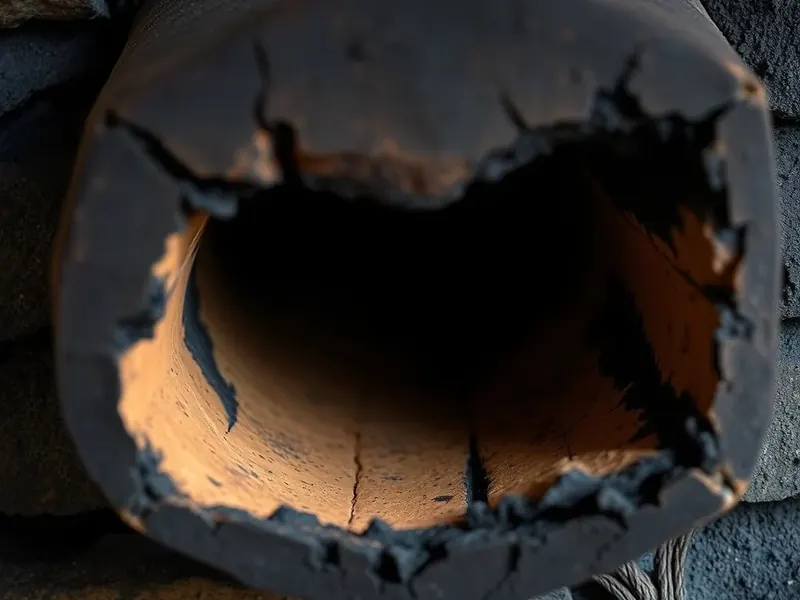
Signs Your Chimney Has Had a Fire
The Chimney Safety Institute of America lists signs to look for, even if nobody noticed a fire:
- Puffy, honeycombed creosote in the firebox or flue
- A warped damper or metal parts that no longer fit
- Cracked or collapsed flue tiles, or pieces of tile in the firebox
- A discolored or distorted chimney cap
- Creosote flakes on the roof or the ground
- Roofing damaged by hot creosote
- Cracks in the exterior masonry, or smoke escaping through mortar joints
In Morris County many of these signs are first spotted at the fall sweep, after a previous winter of burning. If you notice any of them, stop using the fireplace or stove until the chimney is checked. More background is available from the Chimney Safety Institute of America.
What We Do After a Chimney Fire
- Make it safe. If the fire was recent, we confirm the flue is cool, remove loose debris and fallen tiles, and take the fireplace or appliance out of service if needed. Our 24/7 emergency chimney service handles this at any hour.
- Level 2 inspection. NFPA 211 calls for a Level 2 inspection after a chimney fire. We scan the full flue with a camera and examine the smoke chamber, damper, crown, cap and exterior masonry, plus visible framing in the attic and basement.
- Documentation. You receive photos, flue video and a written report to share with your insurance company or adjuster.
- Written repair plan. A clear scope and estimate, with safety items first.
In older Morristown houses, where framing often sits close to the chimney, we look especially carefully for scorching or heat damage around the stack before recommending any repair. We also check every other flue in the same chimney. In larger older homes and in two-family houses around downtown, a boiler or water heater flue may run right beside the fireplace flue, and the heat of a chimney fire can crack the tile wall between them. That shared wall has to be sound before any appliance vents through the chimney again.
Repairing Fire-Damaged Flues and Masonry
Damaged clay tiles cannot be patched reliably, so the usual fix is relining. A UL 1777 listed stainless steel liner, insulated for wood-burning use, or a cast-in-place liner that also strengthens the old masonry, gives the chimney a continuous, sealed flue again. Details are on our chimney liner installation page. Other repairs may include:
- Replacing a warped damper, often with a top-sealing damper
- Rebuilding a heat-damaged smoke chamber or firebox
- Repointing or rebuilding cracked masonry
- Replacing a heat-distorted cap and repairing the crown
On historic homes near the Green and throughout the Morristown historic district, we match exterior brick and mortar so the repair blends in with the original work.
Preventing the Next Chimney Fire
Creosote fuels almost every chimney fire, and it builds fastest from smoldering fires and wet wood. Burn seasoned hardwood, keep fires burning hot rather than choking them down overnight, and never burn wrapping paper, cardboard or trash. Have the chimney swept whenever creosote builds up; every chimney sweep we do includes a look at the flue. Hard, shiny glazed creosote does not come off with an ordinary brush and needs chemical treatment or specialized tools, so we point it out whenever we see it.
With more than 50 inches of precipitation a year in the Morristown area, covered, off-the-ground firewood storage makes a real difference to how dry your wood is when you burn it. The EPA's Burn Wise guidance covers wood selection and storage in detail, and 1stCall Emergency Chimney is glad to talk through safe-burning habits at any visit.