Chimney sweep and repair in Westfield
Westfield's downtown was settled around 1720 as part of the Elizabethtown Tract, in what were then the West Fields of Elizabeth Town, and the township became the Town of Westfield in 1903. Through 1stCall Emergency Chimney, chimney sweep and repair in Westfield, NJ runs from a yearly sweep and flue camera scan to a new stainless liner or a rebuilt chimney top, and emergency calls are answered 24/7. NJ Transit's Raritan Valley Line stops downtown, Route 22 and the Garden State Parkway run just outside the town limits, and Cranford is next door to the east.
A railroad suburb built on Colonial Revival lines
The railroad shaped Westfield. The town's historic design guidelines trace how John Q. and Helen M. Dudley filed a plan for Dudley Park in 1869, how the depression of 1873 slowed building there until the 1880s, and how a new north side station in 1892 and a Central Railroad publicity drive brought a wave of New York commuters. Most houses in the Prospect Street area went up between 1865 and 1910. Stoneleigh Park, planned around 1904 by H.B. Tremaine of the Aeolian Company and his cousin, has thirty houses on about twenty acres, most of them Colonial Revival, and is listed on the State and National Registers of Historic Places. Terrace Park, which takes in Tremont Avenue, was laid out in 1903, and Westfield Gardens filled in between 1909 and 1940, mostly in the 1920s and 1930s.
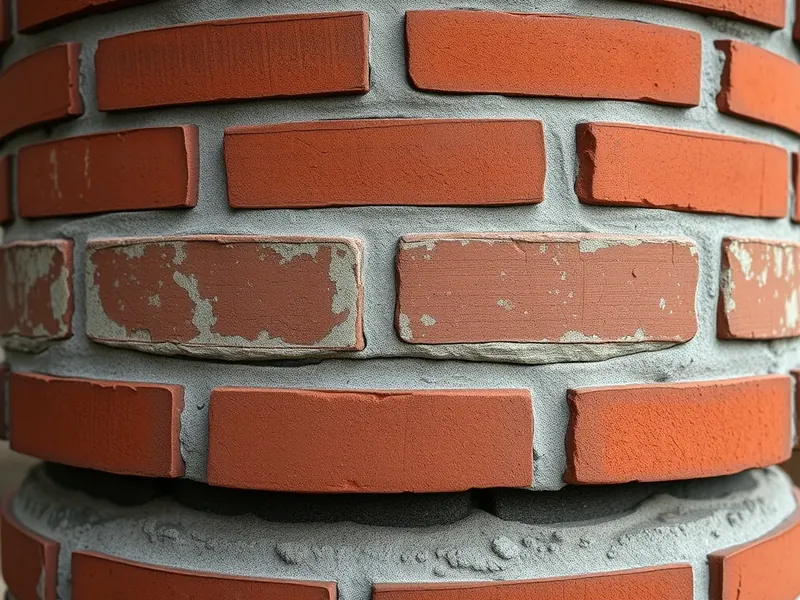
Chimneys on houses from this era are now a century old or close to it. Many were built for coal, then served oil and gas boilers, and their clay tile liners, where they have them, have been through decades of heating and cooling. The tops of tall chimneys on two-and-a-half-story houses take the most weather, so loose upper courses and cracked crowns are common. A camera scan sorts out what each flue needs, and a flue that is cracked or far too large usually gets chimney liner installation: a UL 1777 listed stainless liner sized to the boiler or furnace it now serves.
Tudor, Norman and stucco houses of the 1920s
The 1920s added some of Westfield's most distinctive houses. Starting in 1926, Alfred H. Welch developed two extensions of Westfield Gardens with Tudor- and Norman-style homes. Off East Broad Street, Arthur Rule laid out Wychwood with curving streets, Tudor and Colonial Revival houses and a few storybook cottages by the architect Bernhardt E. Muller, among them a small gatehouse on Canterbury Road. Rule also moved two early stone houses to Wychwood to save them, the 1785 Ball-Platt House from Maplewood and a Dutch farmhouse from Jersey City.
These houses put their chimneys on display. Tudor and Norman designs often carry a large chimney on the front or side wall, sometimes with decorative brickwork, stone trim or clay pots, so the whole stack faces the weather and any repair is visible from the street. Stucco-covered chimneys bring a different problem: the stucco can hide cracked brick and failed mortar until water stains appear inside or the coating bulges. Matching materials matter on both, and chimney leak repair starts by finding where water actually gets in rather than coating over the symptoms.
Preservation rules, timing and emergencies in Westfield
Building continued after the war: the Census counted 18,458 residents in 1940 and 31,447 in 1960, and Union County's community profile puts close to 70 percent of the town's housing before 1960. Westfield set up its Historic Preservation Commission in 1984. If your house is in a designated historic district, such as the Kimball Avenue Historic District within Dudley Park, exterior construction needs a certificate of appropriateness from the commission, so apply before changing how a chimney looks from the street.
The Miller-Cory House on Mountain Avenue, a farmhouse built in 1740 and listed on the State and National Registers, still hosts open-hearth cooking demonstrations, a reminder that the fireplace was once the whole kitchen. Fireplaces in town see far lighter use today, but NFPA 211 still calls for a yearly inspection and a sweep when deposits build up, ideally done before the boiler starts running for the season. In a chimney fire or when a carbon monoxide alarm sounds, the first steps are getting out and calling 911. Then call 1stCall Emergency Chimney, which answers at any hour; emergency chimney service handles a flue check after a fire, loose brick at the top of a tall stack after a storm, or a bird or squirrel in the flue.