Chimney sweep and repair in Montclair
Montclair began as Cranetown, where Azariah Crane and his family built a house in 1694 near today's Orange Road and Myrtle Avenue. From 1812 it was part of Bloomfield, known at first as West Bloomfield, until a dispute over funding a second rail line led to the creation of the Township of Montclair in 1868. Chimney sweep and repair in Montclair, NJ through 1stCall Emergency Chimney centers on what old houses need: thorough sweeping, camera inspections, relining and masonry repair that matches the original, plus emergency response at any hour. Bloomfield Avenue, the old Newark-Pompton Turnpike, still runs through the center of town, and to the west the township climbs onto First Mountain, the first ridge of the Watchungs.
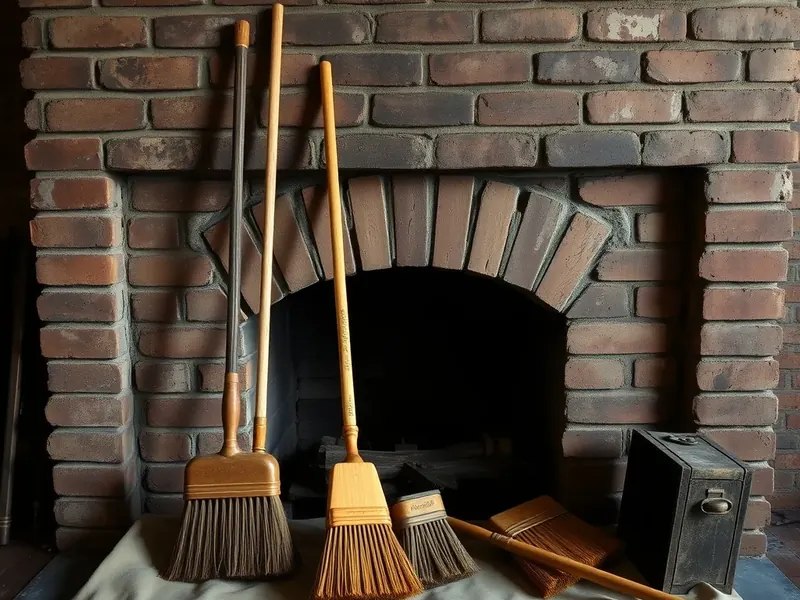
Houses from the 1880 to 1930 boom
The railroad turned Montclair into a commuter town. The Newark and Bloomfield line arrived in 1856, the Greenwood Lake line had five stations in Montclair by 1873, and between 1880 and 1930 the population rose from 5,147 to 42,017. An artist colony grew around the landscape painter George Inness, and the township's own history notes that grand mansions went up alongside many modest homes. Most chimneys built in that half century are now about a hundred years old or more, and they tend to share the same weak spots:
- Flues sized for another era. Many were built when coal heated the house and have since served oil and then gas. Today's gas appliances need a much smaller flue, and in an oversized one the exhaust cools and condenses.
- Clay liners past their prime, or none at all. Cracked tiles and open joints are common, and some early flues were built with no liner.
- Several flues in one stack. Larger houses can have three or four fireplaces and a boiler sharing one chimney, and each flue needs its own camera check.
- Old fireplaces with worn parts. Dampers that no longer seal, cracked firebrick and rough smoke chambers make an old fireplace draw poorly and collect creosote.
A Level 2 chimney inspection records the condition of each flue on camera. Because a stainless liner goes inside the old masonry, chimney relining to UL 1777 can fix most venting problems without altering the outside of the house.
Historic districts and landmark houses in Montclair
Montclair's Historic Preservation Commission, established by ordinance in 1994, oversees four local historic districts, the Town Center, Upper Montclair, Pine Street and Watchung Plaza, plus 64 individually designated landmarks, and the township counts 52 sites on the National Register of Historic Places. Owners who want to alter a landmarked property apply for a certificate of appropriateness. If chimney work will change what neighbors see from the street, such as rebuilding a stack, changing its height or adding a large cap, ask the township whether an application is needed before the job is scheduled, and get photos and a written scope from the chimney pro to go with it.
Outside the districts, the same care still pays off. Replacement brick should match in size, color and texture, and the mortar should match the original joint profile and be no harder than the brick around it. Chimney rebuilding and tuckpointing done this way keeps a century-old chimney looking like part of the house.
First Mountain weather and emergencies
Houses on the slopes of First Mountain sit higher and catch more wind and wind-driven rain than those in the valley below. Eagle Rock Reservation, the 408-acre Essex County park on the Watchung ridge between Montclair, West Orange and Verona, keeps mature woods close to many roofs, which means falling limbs, leaves packed behind the stack and animals looking for an open flue. A sturdy cap and a sound crown handle most of that, and the yearly sweep goes most smoothly when it is booked before the heating season starts.
Should a chimney fire break out or a carbon monoxide alarm go off, everyone leaves the house and someone calls 911 from outside. 1stCall Emergency Chimney takes calls around the clock after that, and 24/7 emergency chimney service handles the follow-up: a flue check after the fire, temporary repairs after a storm, or getting a raccoon out before the flue is capped.