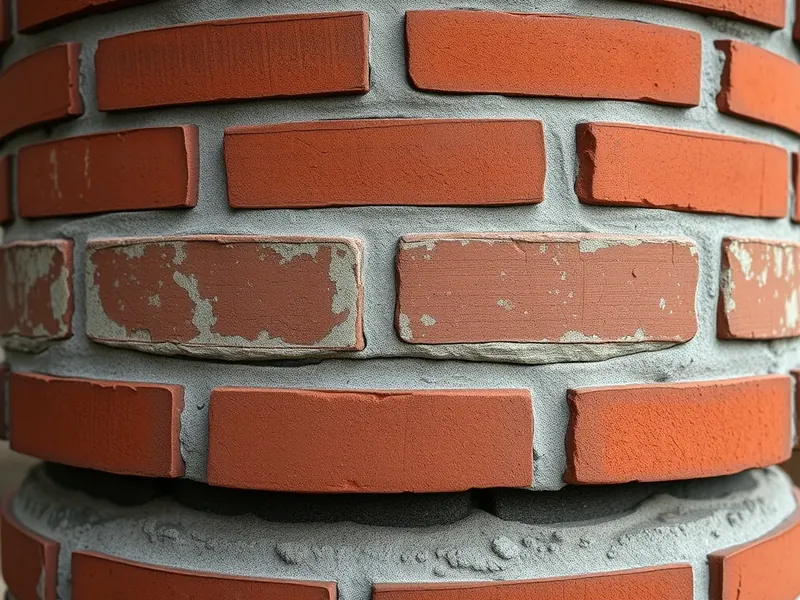
Where Chimneys on Pre-1980 Houses Wear Out First
On a house built before 1980, chimney trouble usually turns up in one of four places.
The flue lining
Clay tile liners crack from settling, from the sudden heat of a chimney fire and from decades of expanding and contracting, and some older stacks have no liner at all, only the inner face of the brick. Either way, heat and combustion gases can reach the masonry and the framing around it, so a cracked or missing liner is generally replaced with stainless steel listed to UL 1777.
The crown and the top courses
The concrete or mortar slab at the top of the stack takes the worst of the weather. Hairline cracks let water in, winter freezes widen them, and the brick just below starts to flake. A cap with a screen keeps out rain, leaves and animals, while crown repair deals with the slab itself.
The smoke chamber and damper
Above the firebox, many older fireplaces have a rough, stepped smoke chamber and a cast-iron throat damper. Rust can freeze the damper open or shut, and an unparged smoke chamber collects creosote in its corners; damper repair or a top-sealing damper also ends the heat loss of a plate that no longer closes.
The heating appliance flue
Plenty of older houses have traded an oil boiler for gas or an old furnace for a high-efficiency unit that vents out the side wall. If only the water heater stays on the old flue, the flue can be far too large for it; the exhaust cools, condenses and eats into tile and mortar.
Buying or Renovating an Older House in Morris, Essex or Union County
- Ask the seller which appliances use the chimney today and which used it in the past, including coal, oil or wood equipment since removed.
- Book a Level 2 inspection, with a camera run through every flue, before the inspection contingency runs out.
- Expect the seller to obtain New Jersey's certificate of smoke alarm, carbon monoxide alarm and portable fire extinguisher compliance, which the state fire code requires before a one- or two-family or attached single-family house is sold, leased or otherwise made subject to a change of occupancy; a town with its own resale inspection may handle that check instead. Either way it covers the alarms and the extinguisher, not the chimney.
- Before replacing the boiler or water heater, adding a fireplace insert or converting to gas logs, have the flue sized and checked for the new appliance.
- Once the fireplace is back in use, open the damper first, before any fire is lit, and keep it that way until the ashes are completely cool, the order the Consumer Product Safety Commission gives.
- Plan on a yearly inspection of every flue, with chimney sweeping whenever soot or creosote builds up.
The Morris County carbon monoxide guide explains where alarms belong and what to do if one sounds.
Quoting the Figures in a Newsletter, Listing or Report
Local newsletters, homeowner associations, real estate agents and reporters are welcome to use this table. The compiled version, CSV file included, is licensed under Creative Commons Attribution 4.0, so you may copy, trim or chart it as long as you credit 1stCall Emergency Chimney and link back here. The Census figures underneath are public domain.
A few cautions keep a quotation accurate. These are American Community Survey 5-year estimates, built from five years of responses, the most reliable ACS series and the one that reaches even the smallest places, though not the most current. Because they come from a sample, each carries a margin of error, which weighs most in towns with fewer homes, so call them estimates and keep the period from the source line. The older-homes count covers owner-occupied houses, detached or attached, and leaves out rentals; the heating share counts owners and renters alike. Parsippany's row stands for Parsippany-Troy Hills Township, its Census name, and a town whose name fits more than one Census unit has no row at all. Set this edition beside a later one only when the two 5-year periods do not overlap, as the Census Bureau's own guidance advises.