Chimney sweep and repair in Livingston
Livingston sits just across the Passaic River from Morris County, a township of about 14 square miles in western Essex County named for William Livingston, New Jersey's first governor. 1stCall Emergency Chimney provides chimney sweep and repair in Livingston, NJ, from fall cleanings and camera inspections to relining and masonry work, and answers emergency calls from the township at any hour. Route 10 runs east from the Morristown area straight into town, and Interstate 280 passes through on its way to neighboring West Orange, so streets off Livingston Avenue, Northfield Avenue and Mount Pleasant Avenue are a direct drive for a local chimney pro.
Mount Pleasant Avenue was one of the first turnpikes in New Jersey, and through most of the 1800s it was the main way into a quiet township of farms and timber lots. Growth came late and then all at once, and that timing explains most of what turns up inside Livingston chimneys today.
Post-war houses and the chimneys they came with
Livingston became a suburb of Newark once cars made the commute practical in the 1920s, but the big change came after World War II. The Census counted 9,932 residents in 1950, 23,124 in 1960 and 30,127 in 1970. Much of the township's housing, including its many colonials and split-levels, dates from those decades, so a large share of Livingston chimneys are now fifty to seventy-five years old. At that age, the same issues come up from street to street:
- Cracked clay tile liners. Decades of heating and cooling open the joints between flue tiles, and only a camera shows it.
- Thin mortar crowns. Many chimneys of the period were finished with a flat layer of mortar instead of a formed crown with an overhang, and that layer cracks and lets water into the stack.
- Orphaned water heaters. When a furnace is replaced with a high-efficiency model that vents through the side wall, a gas water heater can be left alone in a flue sized for two appliances, where its cooler exhaust condenses and attacks the mortar.
- Two flues in one chimney. A fireplace on one level and the heating system on another often share a single stack, and damage in one flue can let smoke or exhaust pass into the other.
A Level 2 chimney inspection with a video scan shows which of these apply to your house, and chimney liner installation with a UL 1777 listed stainless system fixes a cracked or mismatched flue from the top down.
Old homesteads and high ground
Livingston's history reaches back well before the subdivisions. The Ward-Force House on South Livingston Avenue, whose oldest section dates to about 1745, is listed on the National Register of Historic Places and serves as the headquarters of the Livingston Historical Society. Chimneys in houses of that age were built long before modern clearance rules and flue liners, so any old farmhouse fireplace deserves a careful inspection before it goes back into regular use.
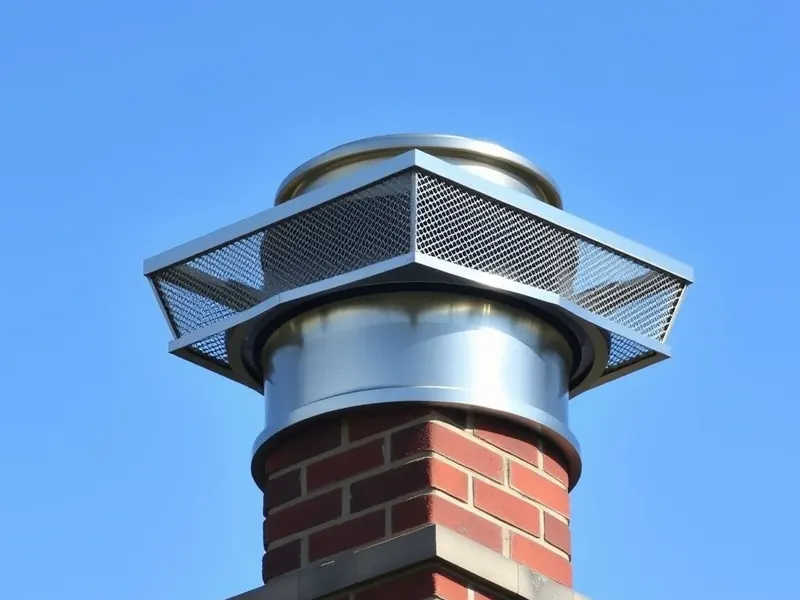
Terrain plays a part too. Riker Hill stands high enough that the Army put a Nike missile control site on it during the Cold War; the site is now Riker Hill Art Park. Houses on the township's higher, wooded ground take more wind, wind-driven rain and falling branches, and the crown, cap and flashing wear out first. Chimney cap and crown repair stops that damage at the top of the stack before water works its way down into the brick.
Booking ahead and getting help after hours
The best time to book a Livingston sweep is late summer or early fall, before the first cold nights fill the schedule. Let the fireplace sit cold for a day beforehand, clear space around the hearth, and make a note of every appliance that vents into the chimney. If you are buying a house in town, ask for a Level 2 inspection before closing. NFPA 211 calls for one when a property changes hands, and it covers the inside of the flue, which a general home inspection usually cannot see.
For a chimney fire or a carbon monoxide alarm, get everyone outside and call 911 first. Then call 1stCall Emergency Chimney, which answers 24/7. Emergency chimney service covers checking a flue after a fire, securing a chimney a storm has damaged and removing an animal before the flue is capped.